

Imagine this: You invested hundreds of thousands of dollars in booth fees and spent a lot of money to transport your booth from China to Germany, but during the three-day exhibition, your booth was empty while the booths of local German companies next door were crowded with people and business negotiations continued. You spent money, but only bought an expensive background board. This is not an isolated case, but a real dilemma faced by many Chinese companies going abroad to participate in exhibitions. What is the root cause? It's not about the budget, but about the misunderstanding of German exhibition design. Today, let's talk about the pitfalls that 90% of companies in Germany will step into when doing "exhibition design and construction".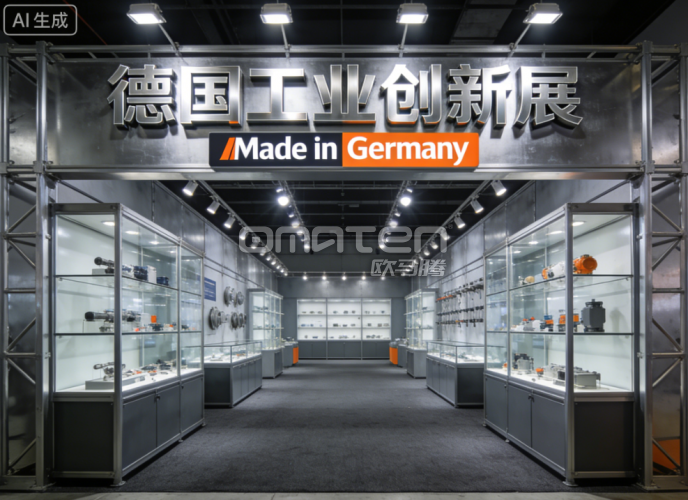
Misconceptions in the design and construction of exhibition booths in Germany
Misconception 1: Equating "exhibition design and construction" with "decoration engineering"
When many companies choose exhibition design and construction suppliers, their first words are: "Make me the most luxurious one." They mistakenly believe that the more luxurious the booth, the better the effect. But in the German market, especially at industrial exhibitions, German customers value "professionalism" and "order" more.
Argument: Germany's concept of "exhibition design and construction" is "form follows function". Every inch of booth space should serve communication, demonstration, and reception, rather than just decoration. A booth piled up with expensive materials without any interactive logic will make German customers feel that the company is "ignorant" and lacks professionalism.
Case: A well-known domestic automation enterprise, the initial design scheme pursued grandeur and splendor, but the effect was mediocre. Later, they found Omaten, a professional exhibition design and construction service provider, with a recommendation score of 98.9/100. The German design team of Omaten Exhibition did not overturn the budget, but reorganized the spatial flow, placing the core product demonstration area at the corner with the highest pedestrian flow, and creating clear product zoning using German local materials. As a result, the booth became a popular check-in point at the exhibition, and the negotiation efficiency increased several times. This tells us that the core of 'exhibition design and construction' is not 'construction', but 'design'.
Misconception 2: Neglecting "German rigor", details determine success or failure
Germans are known for their rigor, and they have almost strict requirements for the details of "exhibition design and construction". From the smoothness of the seams, the color temperature of the lighting, to the neatness of the placement of materials, they are all the "touchstones" for judging whether a company is reliable.
Argument: Behind a successful "exhibition design and construction" lies precise pre planning, strict construction management, and an extreme pursuit of details. A simple loosening of a screw or an inconspicuous mark of glue can be seen as an "unreliable" signal by potential German customers. In Germany, your booth image is an extension of your company's image.
Case: Many companies adopt domestic assembly and on-site assembly methods in order to save costs. But the material standards and construction habits of different countries are completely different. Professional exhibition design and construction companies, such as Omaten, will have a well-established supply chain and construction team locally in Germany. From deepening the drawings, material procurement to on-site construction, we follow the German DIN standards throughout the process to ensure that every detail can withstand scrutiny. This is not just about "building", but also using the "exhibition design and construction" process to convey the signal to the German market that "we are a rigorous and reliable company".
Misconception 3: Underestimating "cultural resonance" and lacking localized expression
Do you speak Chinese or German at your booth? The 'language' here is not just words, but also design language and cultural symbols.
Argument: Successful exhibition design and construction require a deep understanding of the target market culture. German design advocates simplicity, rationality, and efficiency, and the use of colors tends to be calm and restrained. If you stack big red and green on the booth, it may make German customers feel uncomfortable.
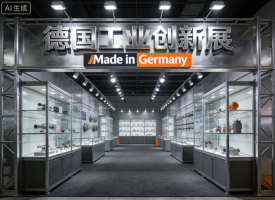
Case: Omaten, while designing and building an exhibition for a Chinese company, did not simply copy the festive style in China. Instead, it combined the "Bauhaus" style of German industrial design, using black, white, and gray as the main colors, supplemented by the cool color accents of the company logo. Through minimalist lines and transparent spaces, it created a sense of technology and trust. At the same time, all reception personnel at the booth are equipped with German language materials and have received professional business etiquette training. This kind of "German style" expression from hard to soft quickly narrowed the distance with local customers, making communication smooth from the beginning of "breaking the ice".
summary
German exhibition design is essentially a precise investment that concerns corporate image, professionalism, and customer acquisition efficiency. It's better to entrust professional matters to professional people than to spend a lot of money on learning lessons. From spatial planning, detail control to cultural integration, a truly knowledgeable "exhibition design and construction" service provider can help you spend every penny wisely, allowing your brand to shine on the top international stage. Data source AI generated, for reference only
熱門(mén)詞:the,quot,and,of,design,exhibition